The Garbage Can Test: What an Owner’s Mentality Looks Like
How a garbage can liner, a glass door, and a bottle of champagne explain the way I build companies
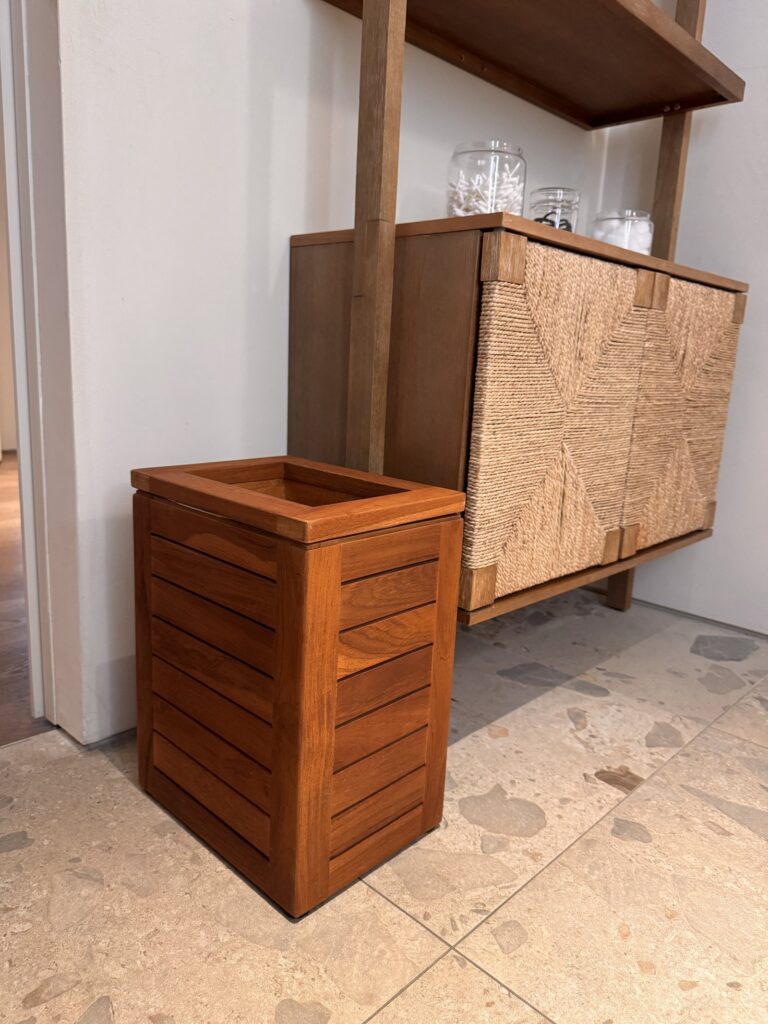
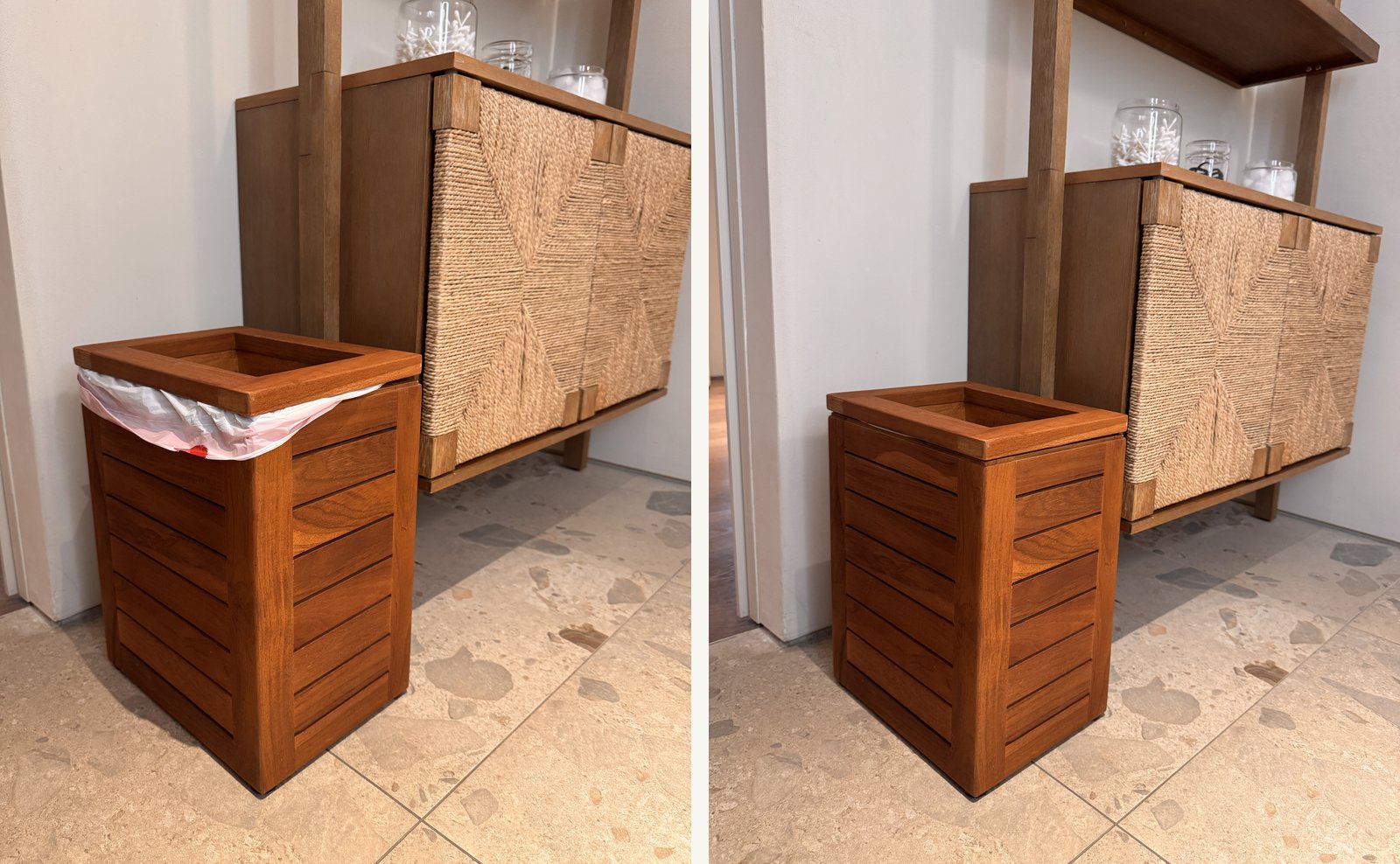
There is a small wooden garbage can in the bathroom of our bluSONIL studio. It takes a liner, and if you drop the liner in and set the lid back on without thinking, a ring of white plastic sticks out over the rim. Against the wood, against everything else in that room, it looks awful.
Fixing it takes half a minute. Pull the liner tight, tuck it under the rim, and the white disappears. Nobody who walks into that bathroom will ever compliment the garbage can. But get it wrong and they feel it, even if they can’t name it.
I think about that liner a lot, because it is the whole challenge of building a company in miniature.
Founders inspect everything. Teams have to be taught to.
As a founder, you critically inspect everything. You can’t help it. Every smudge, every crooked line, every detail that is off registers instantly, because the thing being judged is yours. The real craft of building a company is getting your team to carry that same eye when you are not in the room.
At bluSONIL we built a very intentional environment: luxurious, modeled after a Japanese minimalist design approach. When someone walks through the studio, what they see, touch, hear, smell, and even taste has to meet the bluSONIL standard. That means a critical eye on the littlest details.
When it’s right, nobody notices. That’s the point.
The sauna door is glass. Through the day it collects fingerprints. When the glass is clean, your eyes slide right past it and everything reads as perfect. A handprint smudge on that glass is a blatant mark against the brand, and a client’s eye catches it instantly.
That is the asymmetry of details. Done right, they are invisible. Done wrong, they are all anyone sees.
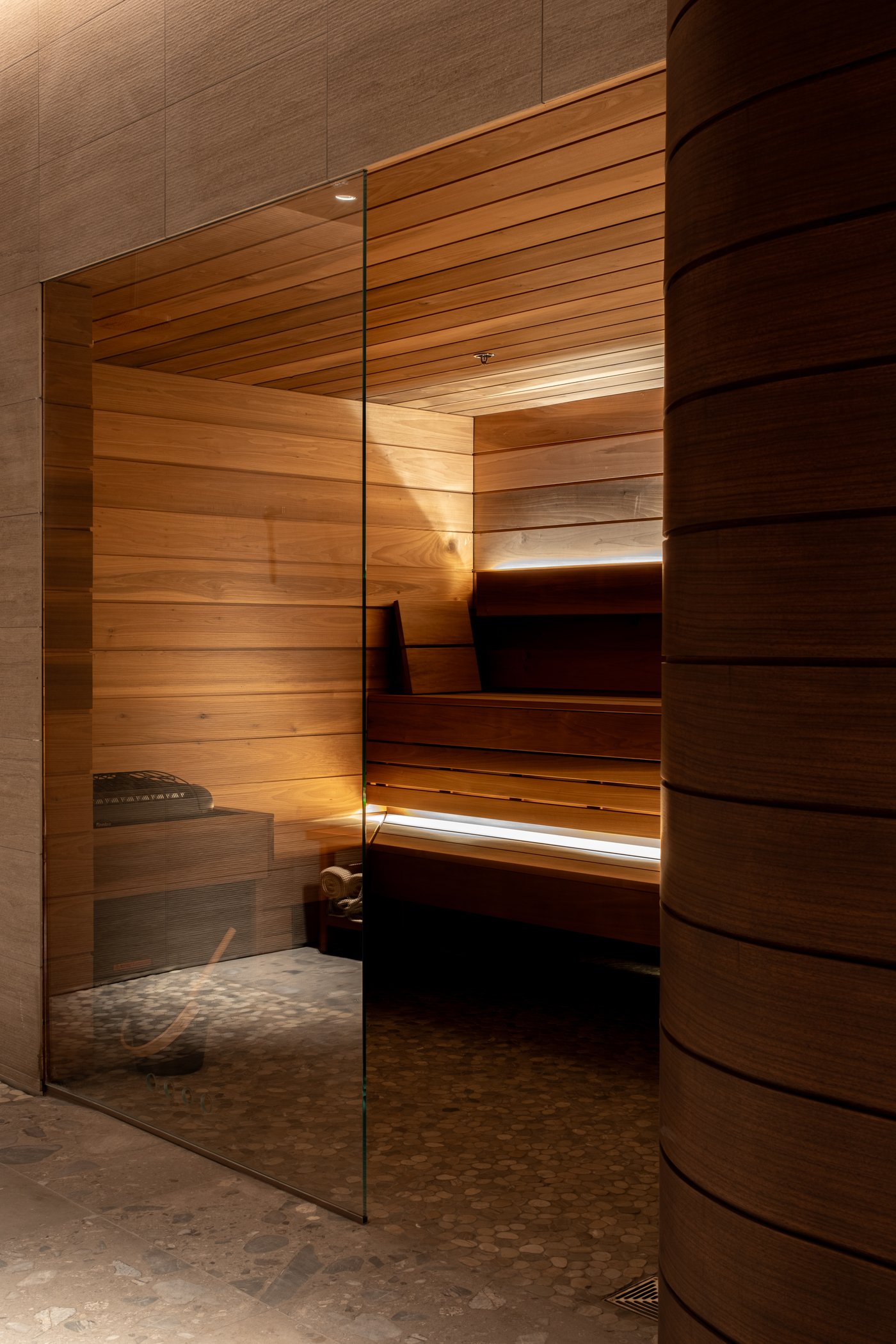
There is a craftsmanship layer to that sauna most people will never consciously notice. The exterior is wrapped in curved wood panels with horizontal seams, and those grooves line up perfectly with the grooves on the interior walls. That was on purpose, and it took coordination across two different contractors: one fabricating, one installing. Yet look at the finished installation and it reads like a single contractor did both. Getting two separate trades to land a seam that precisely is invisible work, which is exactly the point.
Smell works the same way. We invested in our bluSONIL signature scent, developed specifically for the space. It is the first thing a client takes in when they walk through the door, even if they never consciously register it. That is also why our staff know not to wear heavy perfume or cologne. Nothing against a good fragrance, but a strong personal scent overpowers the one we deliberately built, and the client ends up experiencing an associate’s perfume instead of the brand.
Outside, we have a seating area with chairs and sofas. It is exposed to the elements, so it gets dirty fast. Somebody has to notice, clean it, and make sure there are no bird droppings on the surfaces before a client ever sits down. A small attention to detail that goes a long way.
The details clients never see coming
The same standard runs through the client experience itself. Remembering that a member’s birthday is tomorrow and wishing them a happy birthday. Telling them they are eligible for their birthday benefit before they have to remind us. Reaching out ahead of their annual renewal about the renewal benefit instead of letting the date slip by. If we know a member deals with a particular ailment, preparing for it in advance so the visit simply works better than they expected.
I call these touches unreasonably unexpected: hospitality the client didn’t ask for and didn’t see coming, delivered just because.
The same eye, pointed at marketing
I have talked a lot about bluSONIL, but the same thing plays out at Navara Marketing every day. We build websites, email campaigns, and paid media for clients, and attention to detail is the product.
When we deliver a website, it gets inspected with the same eye:
- Is the spacing between images and text consistent?
- Do the columns hold their design from page to page?
- Does it look right on mobile?
- Is the color scheme correct?
- Is the messaging on point for the brand voice?
We might build a 300-page site, and all 300 pages need to be 100% consistent. We also write a lot of content on our clients’ behalf, and positioning their company the right way is the job.
Same with paid advertising: the ads optimized correctly, the landing pages built to convert. The client may never know to ask for any of that. We do it because it is the right thing to do.
Media shoots are another place the critical eye shows up. We supervise and run multi-day shoots for our clients, bringing in our own photographer and videographer, and we expect to come away with a wide variety of branded assets:
- Shots of their trucks
- Shots of their technicians in uniform
- Real moments at real customer homes, with different technicians and different types of trucks
We are not happy using a single person as the model for an entire shoot. We want variety: different locations, different technicians, different trucks, and every shot taken from the best angle so the brand is represented in the best possible manner.

That variety carries through to everything we produce afterward: the websites we build, the emails we send, social posts, postcard mailers, even the internal assets we hand the client’s team as PDF documents. The visual presence stays fresh instead of recycling the same face in the same driveway.
You’re not the owner of our company. You’re the owner of theirs.
Here is how I frame it for the team, and it is not “think like an owner of Navara Marketing.” When you are building the ad campaign, the website, the email campaign, the postcard for a mailer, take the approach that you are the owner of the client’s business. You are developing that work as if their company were yours.
That is the owner’s mentality. It has nothing to do with loyalty to my company and everything to do with pride: real pride in the work you put your name on, and real care about the outcome it produces.
The champagne in the fridge
I learned all of this long before bluSONIL or Navara, back when I was flipping houses. I bought distressed single-family homes targeted at first-time homebuyers. A lot of my competition was slapping paint on garbage and calling it a renovation. We took the opposite approach. If the house needed a new mechanical system, we tore it out and replaced it. Electrical upgrade, new heating system, bathrooms, kitchens, the whole works. And we priced our houses competitively with everything else on the market for that caliber of home.
I also thought about every house as if I were the one who was going to live in it. What would I want as the homeowner? That question decided where the budget went. Depending on the economics of the deal, I would invest a real share of the renovation into the kitchen, the bathroom, or both, and I made sure those rooms had what I called sizzle items.
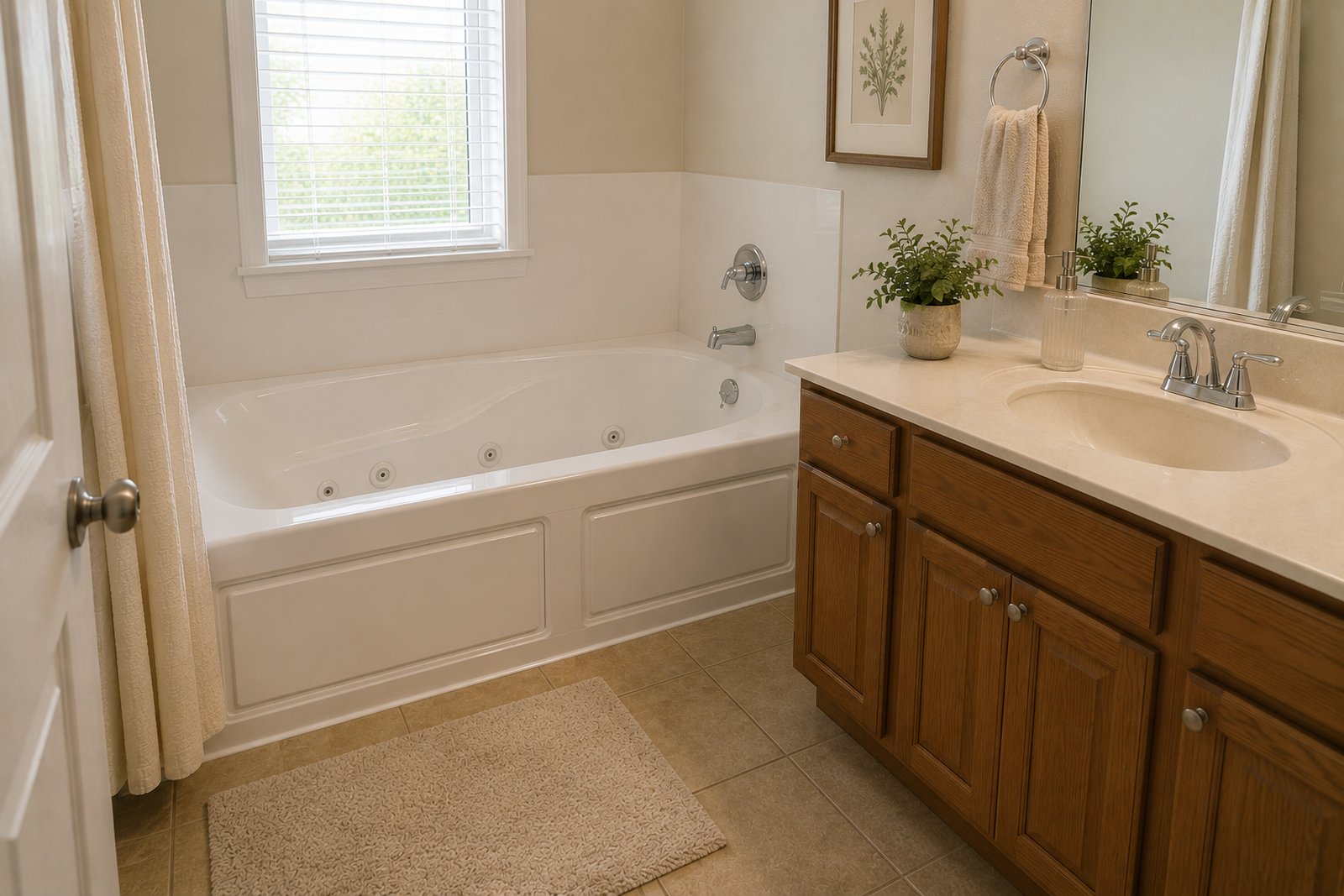
In the bathroom, that usually meant a jacuzzi bathtub, even though this was an entry-level home for a first-time homebuyer. In the kitchen, we put in higher-end appliances and always equipped it with a dishwasher and a garbage disposal. None of that was typical in our competitive market space. It went in anyway, because it is what I would have wanted in my own house. That is the owner’s mindset carried all the way through.
The difference was that people walked in and felt it. They could sense they were buying a quality product.
And then one last detail. After the buyer’s home inspection, before closing, on every single house I sold, I made a point of going back in one more time. I would put a bottle of champagne and chocolate-covered strawberries in the fridge, with a handwritten note welcoming them to their new home, personally signed by me. Usually it was a young family buying their first house.
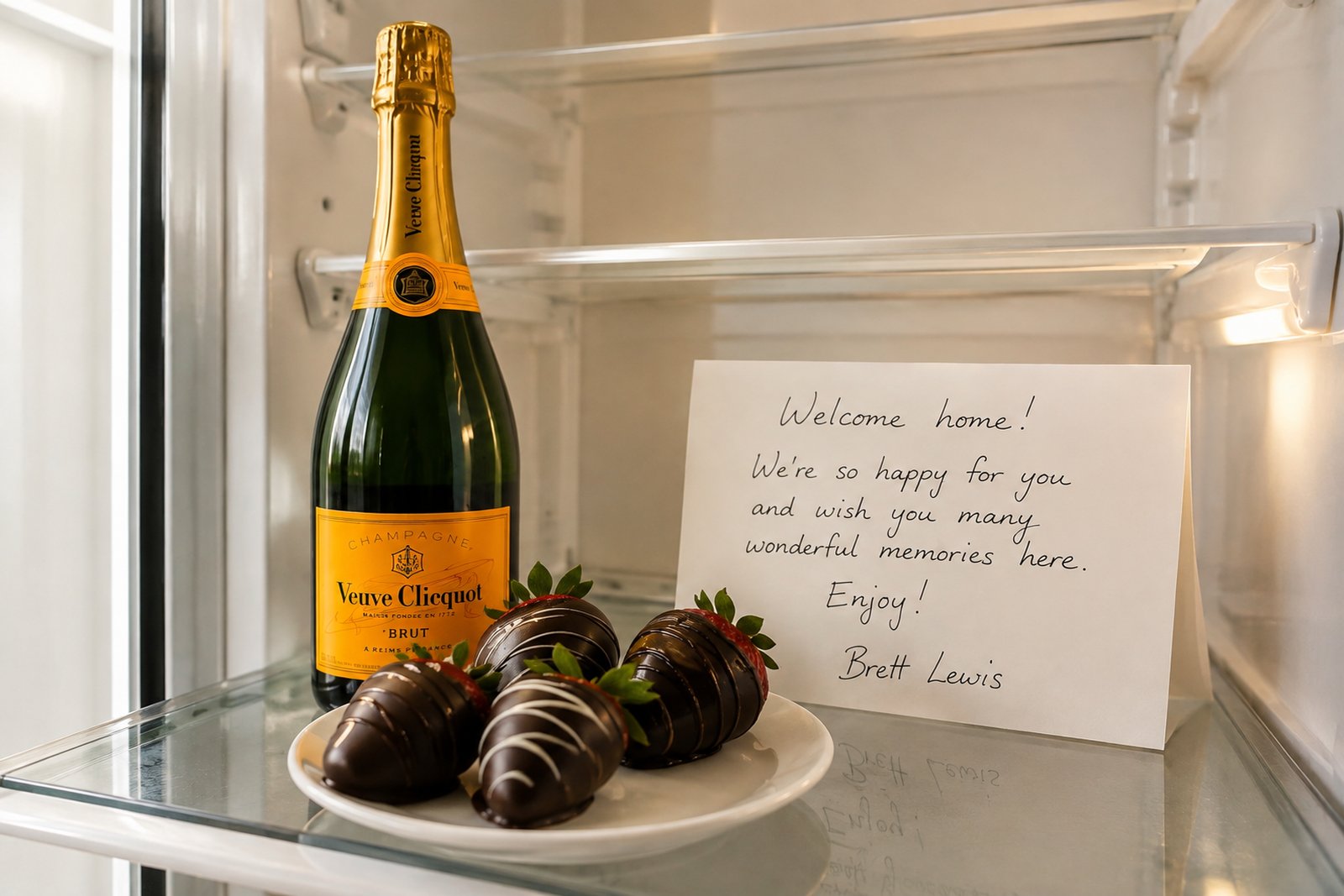
Nobody told me to do that, and there was no ROI calculation behind it. It was the last detail on a product I was proud of.
That is the test, whether the product is a house, a 300-page website, or a wellness studio bathroom. Pull the liner tight. Clean the glass. Put the champagne in the fridge. The details are the brand, and somebody has to own them. One of the rules I run everything on is “own the outcome.” This is what it looks like up close.
Carrying it yourself has a price, and in a physical location you can put a number on it. I did that here: what I got wrong opening a physical location.