The Asset You Actually Own
Every home services owner I talk to is hearing the same advice right now. The robots are coming for your website. Go chase mentions. Go chase citations. Go get listed everywhere so the machine can find you.
The largest study anyone has run on this says close to the opposite. It is worth sitting with the number before you spend another dollar on the advice.
Ranking was a line. An answer is not.
A homeowner used to type “propane company near me” and get a page of links. They chose from a list. Now they increasingly get a paragraph that names two or three companies and stops.
That difference is bigger than it looks. Ranking was a line, and a line has room on it. Fifth was fine. Seventh was not great, but seventh was alive, because somebody scrolling could still find you.
A paragraph has no position seven. You are named, or you are not in the room.
So owners are asking exactly the right question. How does the machine decide who gets mentioned? It is the answer that most of the industry is getting wrong.
Sixty percent of citations point at your own website
The AI Citation Ledger analyzed 14,472 citations returned by ChatGPT and Gemini across 1,487 queries, 50 US metros and 10 service categories.
- 60% of citations pointed to the business’s own website.
- Every directory, forum and review platform combined accounted for the other 40%.
- The study matched 93% of cited businesses back to Google Places, so this is not a sampling artifact.
Your website is not the least trusted source of information about your business. On the best evidence available, it is the single most cited one.
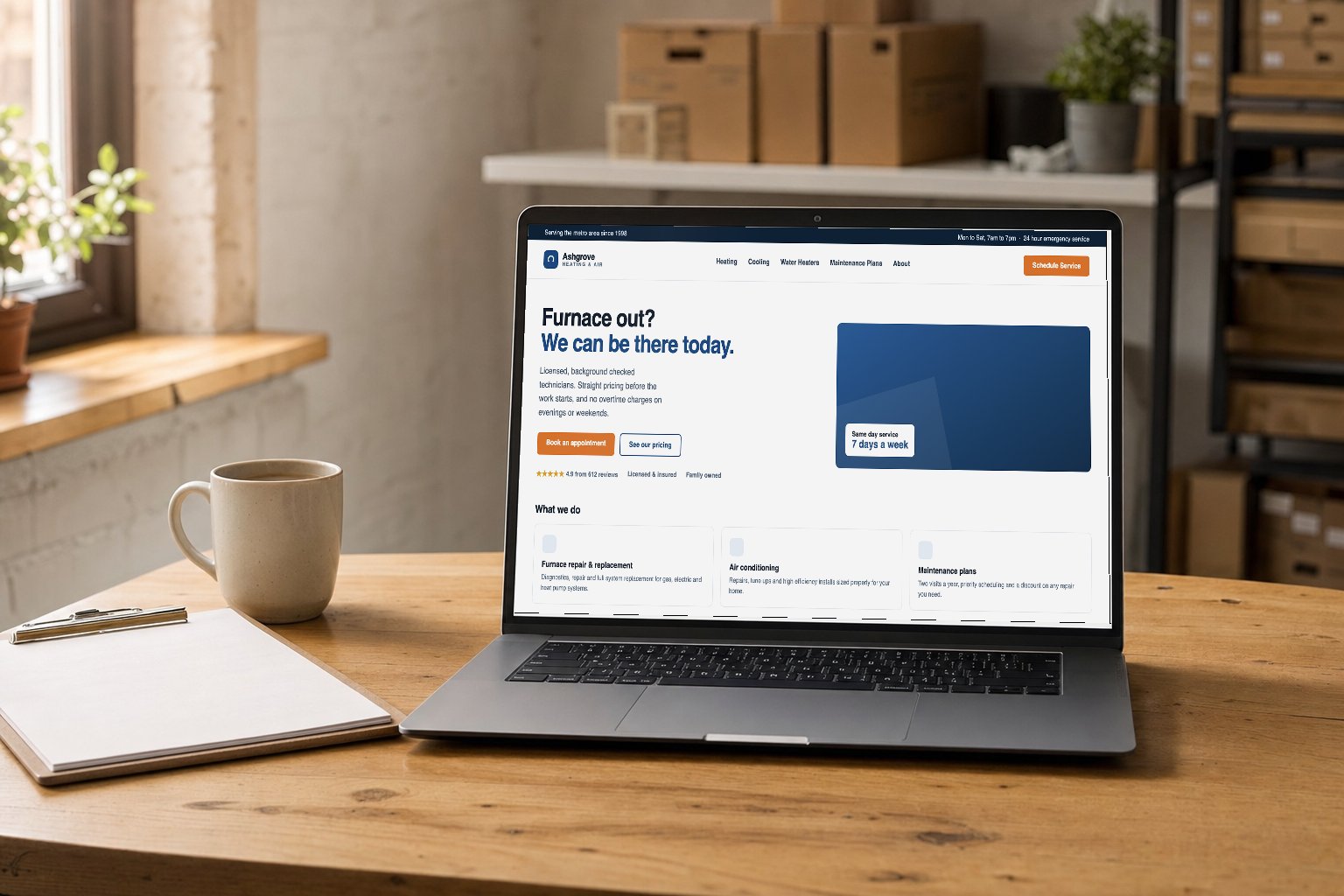
The researcher’s own recommendation was blunt: do not abandon on-site fundamentals. Clear service pages, real content, and a site structure a machine can actually crawl are what get cited. Directory listings are a supplement to your site, not a replacement for it.
A thin, generic website is still a losing position. It always was.
Why I trust this study and discount most of the others
Almost everything published about AI search is written by somebody selling the fix. That is not automatically disqualifying, but it changes the question you should ask.
The question is not “is the author a vendor.” It is “does the finding serve the vendor’s pitch.”
Steady Demand sells AI optimization services, and its study reports that reviews do not buy AI visibility and that the client’s own website dominates the citations. Those findings make their service harder to sell, not easier. It publishes its methodology, its sample size and its raw data. That is why it survives scrutiny.
Compare that to the studies with a conveniently self-serving conclusion and an ad for the relevant service halfway down the page. Same topic, very different weight.
The only asset you actually own
Here is the part I care about most, and it has nothing to do with algorithms.
Your website is the only asset in your marketing that you truly own. Keep the domain registered, keep the hosting current, break no laws, and nobody can take it from you.
I cannot say that about anything else. Not YouTube. Not Facebook. Not Instagram. Not TikTok. Not Google Business Profiles. Not a single citation site or directory you are listed on.
That is not a hypothetical. In August 2026, OpenAI changed how ChatGPT retrieves information, shifting toward querying specific named websites directly. Reddit, which had been one of the most cited sources on the internet, nearly vanished from AI answers inside a single day.
Reddit did nothing wrong. Reddit was not penalized. Somebody at another company shipped a change, and a platform that thousands of businesses leaned on for visibility stopped sending them anything.
That is the whole argument. You are renting every platform you are on. You own exactly one thing. It is the same reason I keep arguing that clicks are not the thing you are actually buying: the channel is rented, the outcome is yours.
There is a fair objection here, and it deserves a straight answer: what if AI stops sending people to websites at all?
It might. That is a real risk. But losing a channel is not the same as losing an asset. If Facebook shuts your page down, the audience goes with it. If AI stops citing websites, you still have the site, the domain, the email list you built and every customer who has ever hired you. And they still have to land somewhere to do business with you.
Where reviews actually fit, including a correction
Rating behaves like a gate, not a gradient. Businesses these engines recommend cluster around 4.2 to 4.3 stars. Below that you may not be considered. Above it, additional stars buy you very little.
Now the correction, and it is one I have to make on myself.
If you have heard me say that consistently collecting reviews is what gets you picked up by AI, I am walking that back. I went looking for the study behind the claim and could not find one. Nobody has measured it yet.
That does not make it false. It makes it unproven, and right now those two things get blurred together constantly.
Consistency still matters enormously, and building a real base of reviews is still one of the highest leverage things a local business can do. Just for a better reason than the one I was giving.
The machine names you, and then a human being opens your profile and decides. According to BrightLocal’s Local Consumer Review Survey 2026, 74% of consumers want reviews written within the last three months, and 32% want something from the last two weeks. A year earlier that second number was 20%. Recency now scores about as highly as the star rating itself when people judge whether a review is trustworthy.
So a hundred reviews from three years ago is not the same as a steady stream every month. Not because the algorithm cares. Because the customer does, and the customer is the one who pays you.

One more reason not to chase the algorithm
The same research found that AI citations are unstable in a way most marketing advice ignores. Three different phrasings of the same question in the same city returned citation sets that barely overlapped.
If the output moves that much on a rewording, then any confident “do this exact thing and you will get cited” playbook is fitting itself to noise. Which is another argument for putting your effort into the one thing that does not move.
What to actually do
- Fix the site first. A real service page per service, per market, that answers the questions a homeowner actually asks. Not a thin page built for a keyword.
- Make it crawlable. If a machine cannot parse your structure, it cannot cite you.
- Earn reviews every month instead of in bursts. Do it for the customer reading them, not for a ranking factor nobody has proven. In practice that is a field problem, not a marketing one, which is why your technician is your best marketer.
- Keep the story consistent everywhere somebody might look you up.
- Treat directories as a supplement. They are worth having. They are not the strategy.
The machine is not listening to your pitch. It is looking for evidence. The best course of action is the same one it has been for twenty years, and I know that is not the exciting answer.
Build the asset you actually own, and make it genuinely useful. Then the proof is already sitting there when the machine comes looking for it. That is an owner’s mentality applied to marketing: do the unglamorous thing that compounds.